Solution for Enhancing the Synthesis Efficiency of Pharmaceutical Intermediates Using Shanghai 3S Tech's Photocatalytic Reactors
2026-04-20
abstract:Shanghai 3S Tech's laboratory parallel photocatalytic reactor significantly enhances the synthesis efficiency of pharmaceutical intermediates through three core technologies: multi-station independent control, precise light control, and intelligent temperature control.
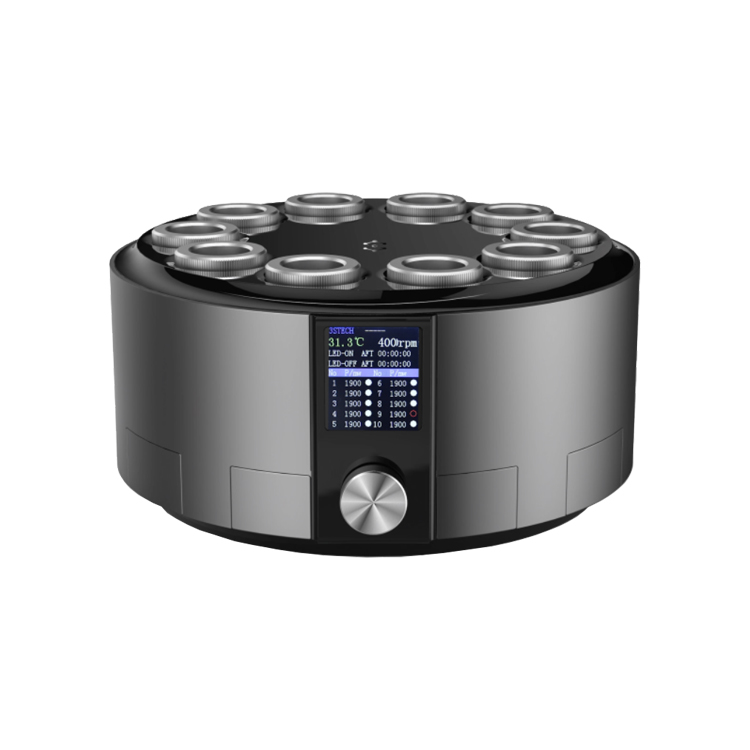
Shanghai 3S Tech's laboratory parallel photocatalytic reactor significantly enhances the synthesis efficiency of pharmaceutical intermediates through three core technologies: multi-station independent control, precise light control, and intelligent temperature control. The specific solutions are as follows:
I. Multi-Station Parallel Experiments to Shorten the R&D Cycle
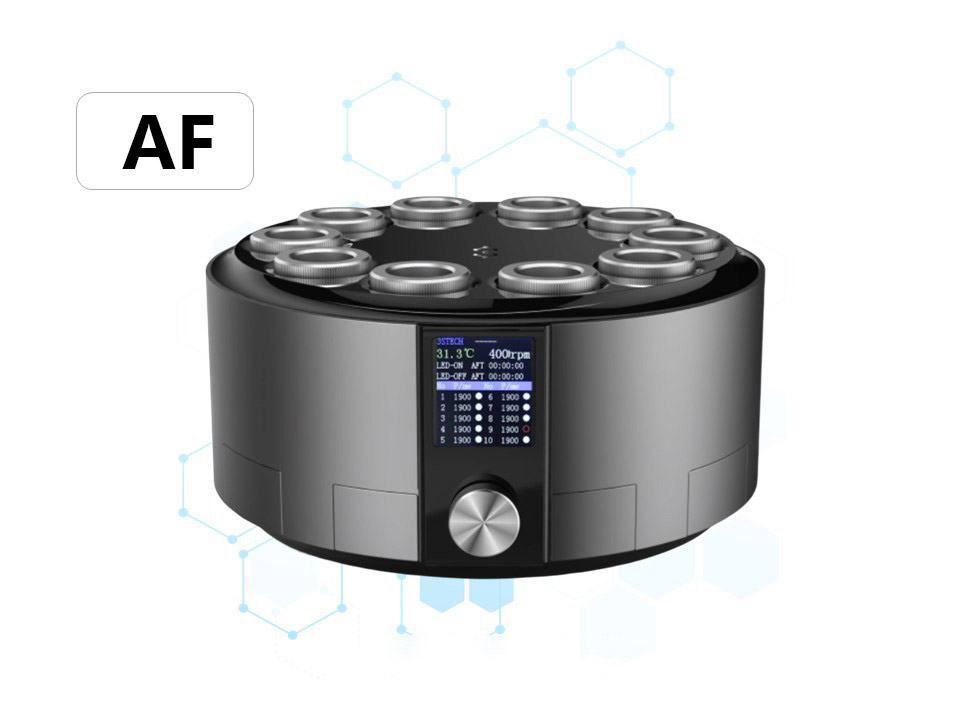
The equipment supports 10 independent reaction sites, with each station allowing for individual adjustment of light intensity (0-15W), stirring speed (300-2500 rpm), and reaction time (0-99 hours), enabling multiple reactions to be conducted simultaneously. For instance, in the synthesis of pharmaceutical intermediates, parallel experiments can be used to rapidly screen for the optimal catalyst, illumination wavelength, and reaction conditions, reducing the cycle time of traditional single experiments from several days to just a few hours, thereby greatly improving R&D efficiency.
II. Full-Spectrum Precise Light Source to Match Catalytic Requirements
The equipment is equipped with a 250-975 nm wide-spectrum LED light source, covering the ultraviolet to near-infrared range and offering over a hundred monochromatic light options to precisely match the absorption spectra of different photocatalysts. For example, in the synthesis of an anticancer drug intermediate, the use of 365 nm ultraviolet light to excite the TiO₂ catalyst increased photocatalytic efficiency by 30% compared to traditional mercury lamps, with a product purity exceeding 99%. Additionally, the light source has a lifespan exceeding 100,000 hours and a light decay rate of less than 5% per year, ensuring long-term stability.
III. Intelligent Temperature Control and Uniform Illumination to Ensure Reaction Stability
Liquid-cooled temperature control system: The temperature range covers -20°C to 80°C, with circulating cooling offsetting the thermal effects of the light source to prevent localized overheating and side reactions.
High-uniformity illumination design: A reflector is used to focus the light, combined with magnetic stirring, to ensure uniform illumination of the reaction system. Experimental data shows that the degradation rate deviation of samples in the same batch is less than 2%, with significantly better data repeatability compared to traditional equipment.
Related Reading
hot articles