Laboratory Photoreactor for Photochemical Reactions, Scientific Research Photocatalytic Reactor - Model Features, Specifications & Applications
2025-11-20
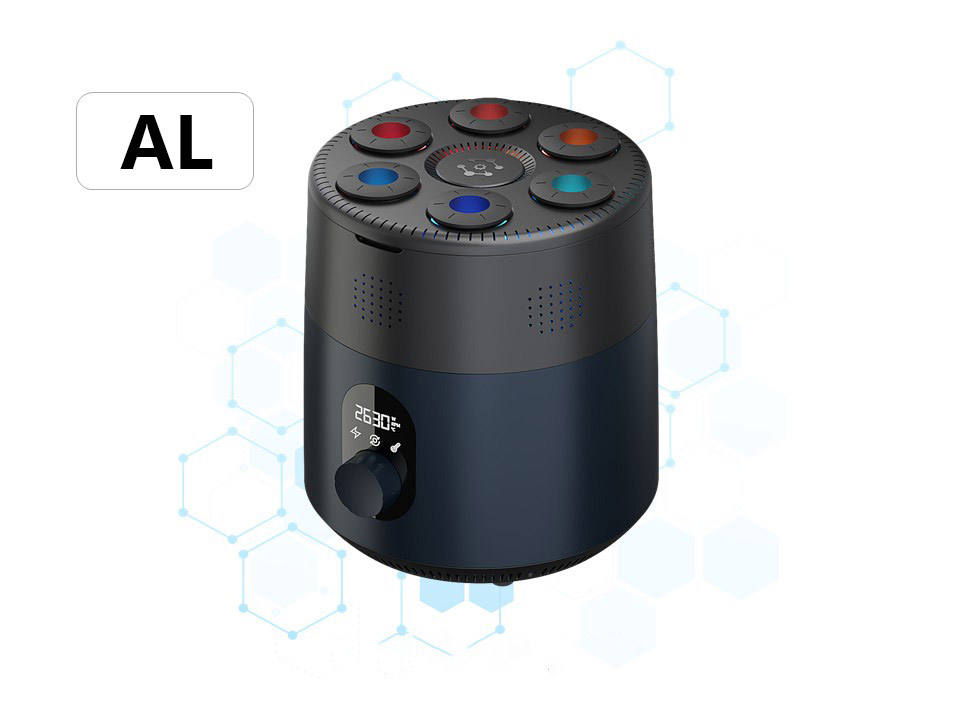
abstract:The AL3 Photocatalytic Reactor from Shanghai 3S Technology is a 6-station photochemical reaction system designed specifically for laboratory research. It supports light sources with wavelengths ranging from 365-975nm, meeting multidisciplinary research requirements.
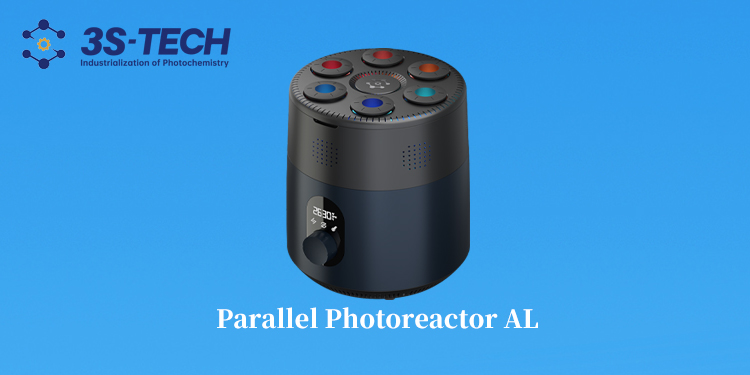
The AL3 Photocatalytic Reactor from Shanghai 3S Technology is a 6-station photochemical reaction system designed specifically for laboratory research. It supports light sources with wavelengths ranging from 365-975nm, meeting multidisciplinary research requirements.
FUNCTIONAL COMPONENTS
• Multi-Station Independent Control System: 6 independent reaction stations enable simultaneous experiments under different conditions, enhancing research efficiency
• Temperature Control: Air-cooled temperature control system
• Modular Light Source Design: Interchangeable LED modules with different wavelengths, compatible with visible and near-infrared photocatalysis requirements
• Integrated Stirring System: Built-in magnetic stirring system with adjustable speed (300-1500 rpm) ensuring reaction uniformity
SPECIFICATIONS
• Reaction Stations: Standard 6-station design compatible with various reactor vessel sizes
• Light Source Options: Selectable LED light sources with specific wavelengths according to research needs
• Temperature Range: Room Temperature (RT) to 40°C, suitable for thermosensitive photochemical reactions
• Structural Design: All-aluminum alloy body with space-saving design for easy operation in laboratory settings
APPLICATION SCENARIOS
• Pharmaceutical R&D: Optimization and screening of photo-sensitive reactions in drug intermediate synthesis
• Materials Science: Performance testing and development of photocatalytic materials
• Environmental Science: Photocatalytic degradation of environmental pollutants and wastewater treatment research
• Organic Synthesis: Photo-initiated polymerization reactions and high-throughput light condition screening
• Fundamental Research: Exploration and verification of chemical reaction mechanisms
This equipment is particularly suitable for scientific research scenarios requiring high-throughput processing, uniformity, flexibility, and precise light intensity control. It is widely applied in university laboratories, research institutions, and industrial R&D departments in pharmaceutical, environmental protection, and other fields.
Related Reading
hot articles