Single-Station Full-Spectrum Photocatalytic Reactor – Working Principle / Functional Components / Key Features and Advantages
2025-11-20
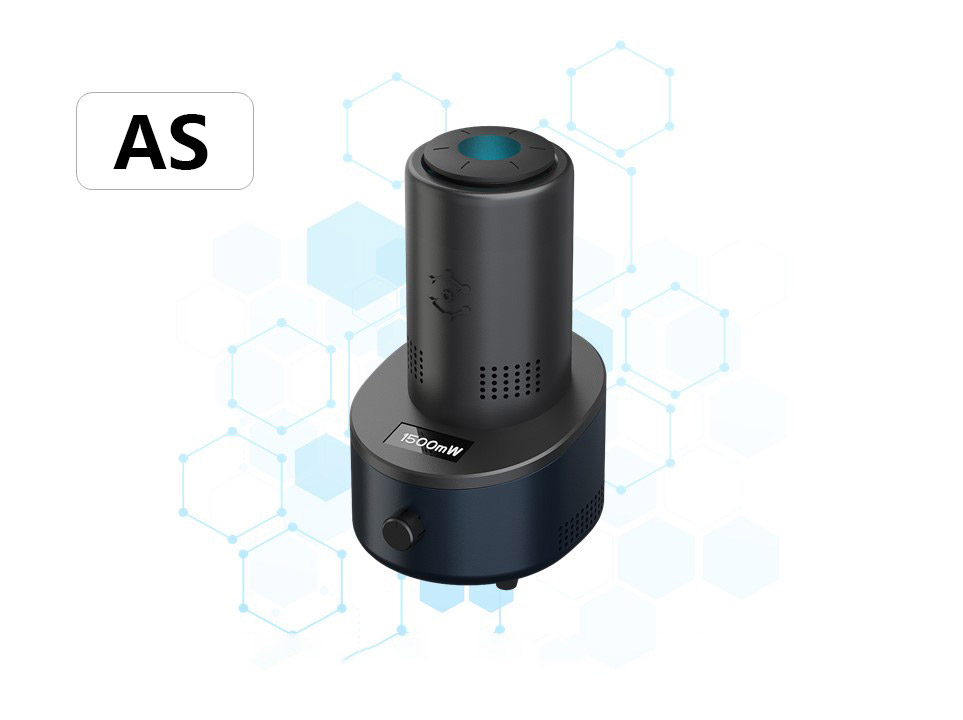
abstract:The AS1 Single-Station Photochemical Reactor from Shanghai 3S Technology is a full-spectrum photocatalytic reactor,The system integrates uniformly distributed light sources and magnetic stirring to ensure thorough exposure and mixing of reactants.
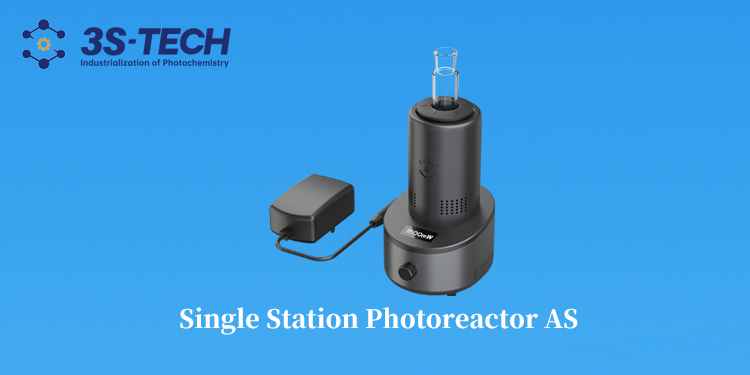
The AS1 Single-Station Photochemical Reactor from Shanghai 3S Technology is a full-spectrum photocatalytic reactor featuring the following core characteristics:
Working Principle
Based on the fundamental principles of photochemical reactions, this device activates reactants by irradiating them with light sources of specific wavelengths. Molecules absorb photons, transition from the ground state to the excited state, and initiate chemical reactions. The system integrates uniformly distributed light sources and magnetic stirring to ensure thorough exposure and mixing of reactants.
Functional Components
Light Source System:
Broad wavelength range: 250–975 nm (full-spectrum coverage)
Over 100 light source options for precise selection
Reaction Unit:
Compatible with NMR tubes and reaction tubes/bottles (5–100 mL)
Customizable sizes available
Control System:
Electrical power control precision: 10 mW
Light intensity up to 1000 mW/cm²
Auxiliary System:
External magnetic stirrer (300–1500 rpm)
Air-cooling temperature control
Key Features and Advantages
Full-Spectrum Coverage:
250–975 nm wavelength range, overcoming technical challenges in the deep ultraviolet range (250–360 nm).
Precise Control:
Light power adjustable with 10 mW precision; light decay<5% per year, ensuring long-term stability.
Flexible Adaptability:
Operates on standard stirrers; supports parallel experiments with multiple units.
Wide Application:
Suitable for pharmaceutical synthesis, materials science, fragrance production, and reaction mechanism studies.
Modular Design:
Interchangeable light source modules for easy maintenance and upgrades.
This advanced platform provides precise, stable, and efficient support for photochemical reaction research in chemistry, environmental science, and life sciences.
Related Reading
hot articles