Technical Parameters and Functional Advantages of Timing Control System for Shanghai 3S Tech LED Photoreactor
2026-09-22
abstract:Shanghai 3S Tech LED photoreactor is equipped with a self-developed microcomputer timing control system. The timing range covers 0–99 hours. Parameters can be set directly via the touch panel, supporting unified time sequence configuration for multiple stations with high time control accuracy.
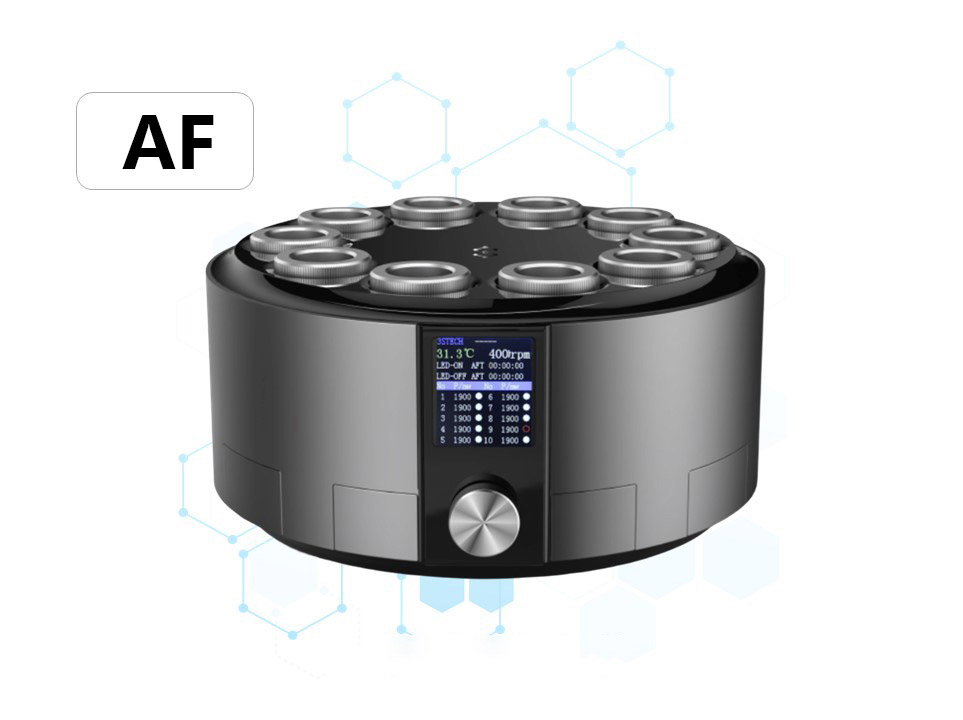
Shanghai 3S Tech LED photoreactor is equipped with a self-developed microcomputer timing control system. The timing range covers 0–99 hours. Parameters can be set directly via the touch panel, supporting unified time sequence configuration for multiple stations with high time control accuracy. It is suitable for short-duration rapid photocatalytic tests and long-time photosynthesis experiments lasting dozens of hours. The system can link the light source and magnetic stirring module to automatically stop operation synchronously once the preset time is reached, eliminating manual start-stop operations. The main unit supports parallel experiments of up to 10 stations, with independent light source power adjustment from 0 to 15 W and stirring speed ranging from 300 to 2500 rpm. It operates in coordination with timing programs to meet standardized condition requirements for parallel control experiments.
The core advantage of this timing control system lies in enabling unattended experiments. Researchers can preset time sequences in advance, so on-site attendance is unnecessary for overnight or cross-period experiments. The system automatically cuts off illumination and stirring upon expiry to prevent excessive illumination of samples which induces side reactions, reduces manual timing errors and improves repeatability of experimental data. Built-in time sequence protection logic prevents long-time no-load operation of light sources, mitigating light decay and extending the service life of LED light sources. In fields such as pharmaceutical intermediate synthesis, environmental pollutant degradation and photocatalytic mechanism research, the timing system ensures consistent illumination cycles for multiple groups of samples, providing a stable and reliable automatic control solution for high-throughput parallel experiments.
Related Reading
hot articles