Liquid-Cooled Temperature-Controlled Photocatalytic Reactor, Specifications/Technical Parameters/Product Features/Application Scenarios
2025-11-20
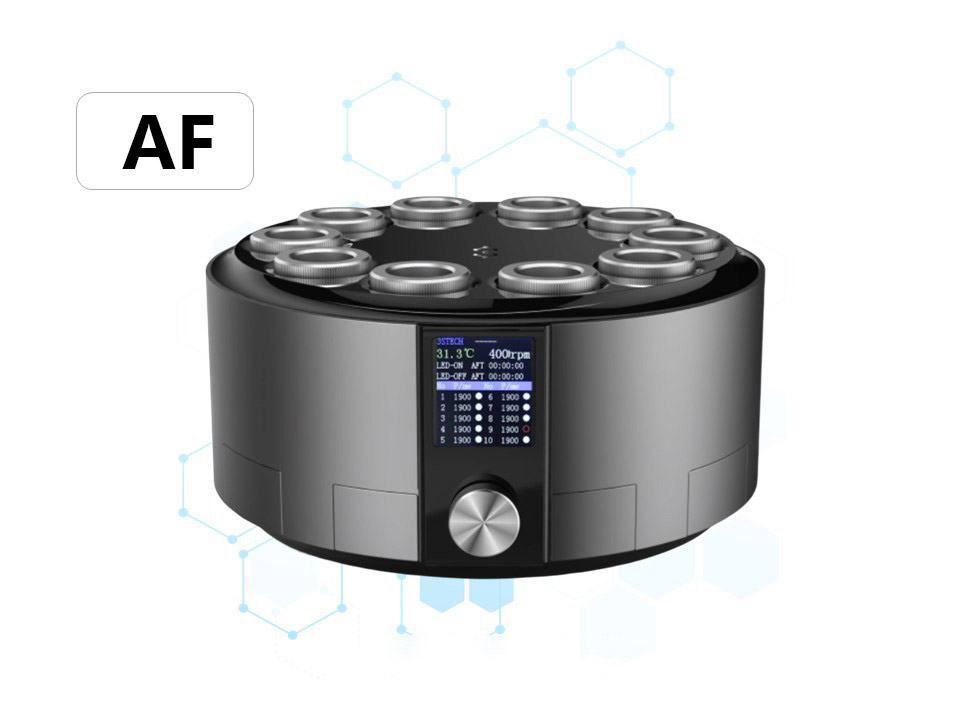
abstract:Developed by Shanghai 3S Technology, the AF3 model Liquid-Cooled Temperature-Controlled Photochemical Reactor is designed for high-precision photochemical research, featuring precise temperature control from -20°C to +80°C, meeting diverse scientific research needs.
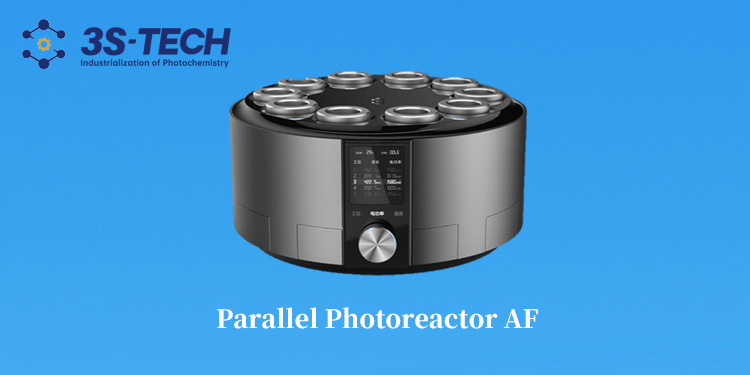
Developed by Shanghai 3S Technology, the AF3 model Liquid-Cooled Temperature-Controlled Photochemical Reactor is designed for high-precision photochemical research, featuring precise temperature control from -20°C to +80°C, meeting diverse scientific research needs.
I. Key Specifications & Model Selection
AF3 Model:
10 independent reaction sites, compatible with 2–50 mL reaction tubes
Liquid-cooled temperature control system
Wavelength Range:
250–975 nm (250–360 nm customizable), covering ultraviolet, visible, and near-infrared regions
Light Source Power:
0–15 W per channel, independently adjustable; light intensity up to 1000 mW/cm²
II. Core Product Features
Precise Temperature Control:
Liquid-cooled system ensures accurate temperature regulation and data consistency.
High-Throughput Design:
Supports up to 30 independent reaction channels for parallel reaction condition screening.
Flexible Light Sources:
Replaceable LED modules (365 nm, 405 nm, 520 nm, 630 nm, 730 nm, etc.).
Built-In Stirring:
Adjustable speed from 300 to 2500 RPM.
Smart Control:
Digital touch interface + timer settings + modular programming for user-friendly operation.
III. Main Application Scenarios
Photocatalysis Research:
Performance testing and development of photocatalytic materials.
Pharmaceutical Synthesis:
Optimization of photosensitive reactions in pharmaceutical intermediate synthesis.
Environmental Science:
Photoreaction studies on pollutant degradation and wastewater treatment.
Materials Science:
Light-initiated polymerization studies in organic synthesis and materials research.
Industrial Applications:
Chemical production, pharmaceutical synthesis, and environmental remediation.
Related Reading
hot articles